UX & UI Design
From research to interface — uncovering how real users think, then building digital experiences that convert, retain, and perform.
Research-led design.
Built to convert, not just to impress.
Most digital products don't fail because of what they do. They fail because of how they make people feel trying to do it. From evidence to interface: finding out what your users actually need, then designing experiences that work.
Poor UX rarely feels like a design problem. It feels like a revenue problem.
High bounce rates. Low conversions. Users dropping off at the same point. Support teams fielding the same questions on repeat.
The fix isn't a new colour palette. It's understanding exactly where the friction lives and removing it. That's where we start.
Sound familiar?
You don't always know you have a UX problem. It tends to disguise itself. If any of these land, you're in the right place::
We just relaunched and the numbers still aren't moving."
Users keep dropping off at the same point. We don't know why.
Our support team keeps getting the same question but the product should be answering them.
It made perfect sense to us when we built it. Apparently not to everyone else.
We've added feature after feature and the whole thing is starting to feel like a mess.
What's not working?
Let's find out what's broken, what to do about it, and fix it properly.
What we deliver
You can't fix what you don't understand. Before a wireframe is drawn, we need to understand the people who'll use what we build, who they are, what they're trying to do, and where the experience breaks down for them. The findings shape everything that follows: not just the design, but the content, the structure, and the decisions that drive the build.
Already have a site but something isn't landing? Before spending on a full redesign, it's worth knowing exactly what's wrong. We assess your existing experience against usability best practices and real user behaviour, and give you a clear, prioritised plan for what to fix first. Not a list of problems, but a practical roadmap.
How content and functionality is organised determines whether users find what they need or give up trying. We map user journeys, define site structures, and build navigation systems that feel effortless because the thinking behind them was anything but.
We design in low and mid fidelity before a single line of production code is written. Wireframes let us test structure and flow without the noise of visual design. Interactive prototypes let you and your stakeholders see something real and give you an opportunity to challenge it before it costs serious money to change. Fewer surprises at build. Less rework after launch.
From component design to full interface systems, we design with intention. Visual hierarchy, typography, colour, spacing, interaction states. Every decision serves the user experience, not just the brand guidelines. For teams building at scale, a design system fixes the slow creep of inconsistency at the root. Resulting in documented components that keep the product coherent as it grows, without needing a designer for every new page.
Accessible design isn't a compliance checkbox. It's part of how we design from the start. We work to WCAG standards and design for the full range of users.
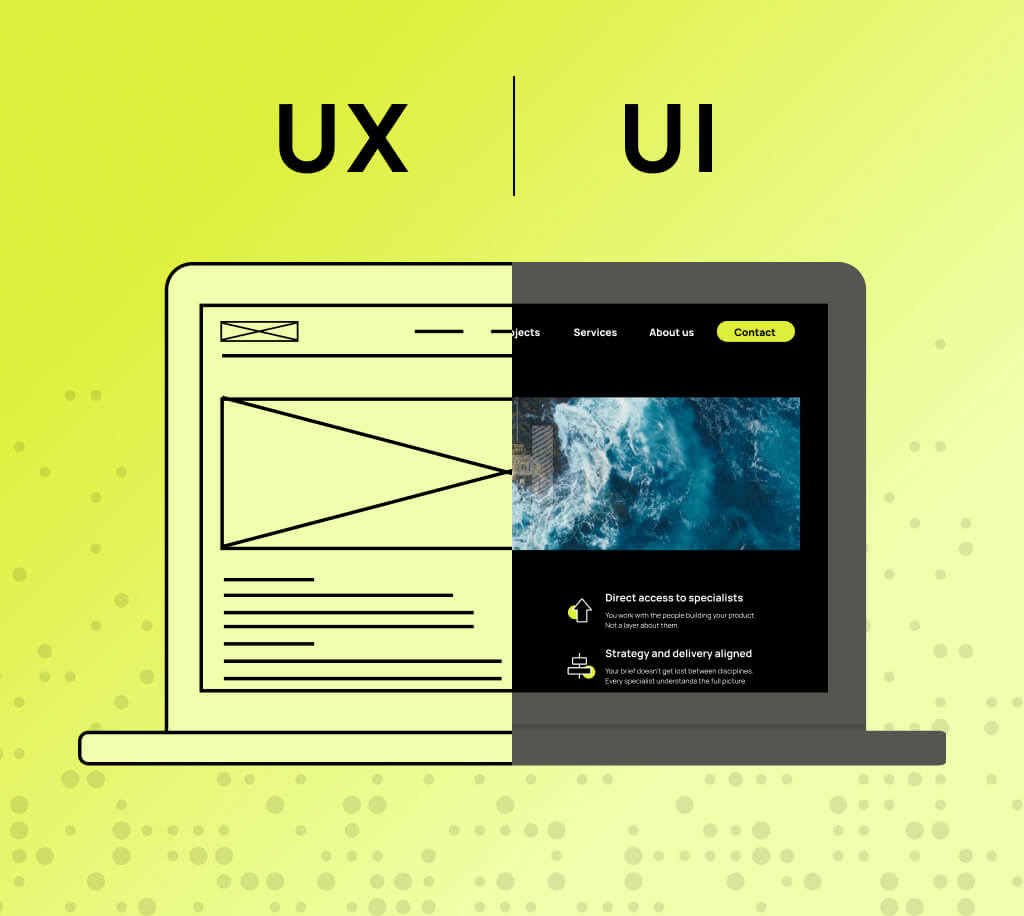
UX and UI - what's the difference?
They're closely related but serve different purposes. Understanding the distinction helps you know where the effort needs to go.
In practice, the two are inseparable but different situations call for different emphasis. We'll always be honest about where the effort is best spent.
UX: How it works
The logic and journey behind every interaction
UI: How it feels
The visual layer users can see
From UX to web design – why the order matters
UX design and web design are distinct disciplines, but they work best when they happen in sequence. Not in parallel and never in reverse.
UX establishes the foundation: who the users are, what they're trying to do, how information should be structured, and where the experience needs to guide them. That thinking – validated through research and prototyping – is what the visual design layer is then built on top of.
When web design precedes UX, teams end up retrofitting structure into aesthetics. Navigation gets rethought after the layouts are approved. Page hierarchies get rebuilt when user testing reveals something obvious that no one caught earlier. It costs time, budget, and confidence.
At Rain, UX and web design sit together. The UX work directly informs the visual design decisions that follow. The layout logic, the content hierarchy, the interaction patterns. The handoff isn't a document; it's a conversation that's already been happening.
Not sure where your site is letting you down?
We can start with an audit. Or a conversation. Either way, we'll be honest about what we find. And practical about what to do next.